All Collections
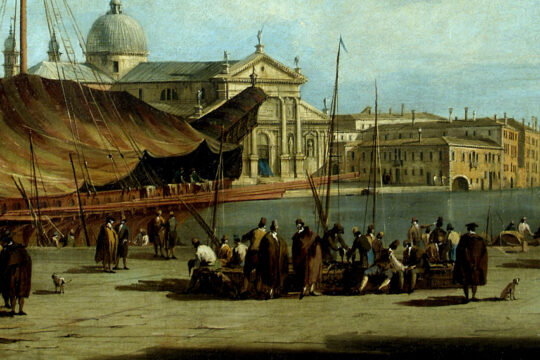
Art from the fourteenth to the eighteenth centuries
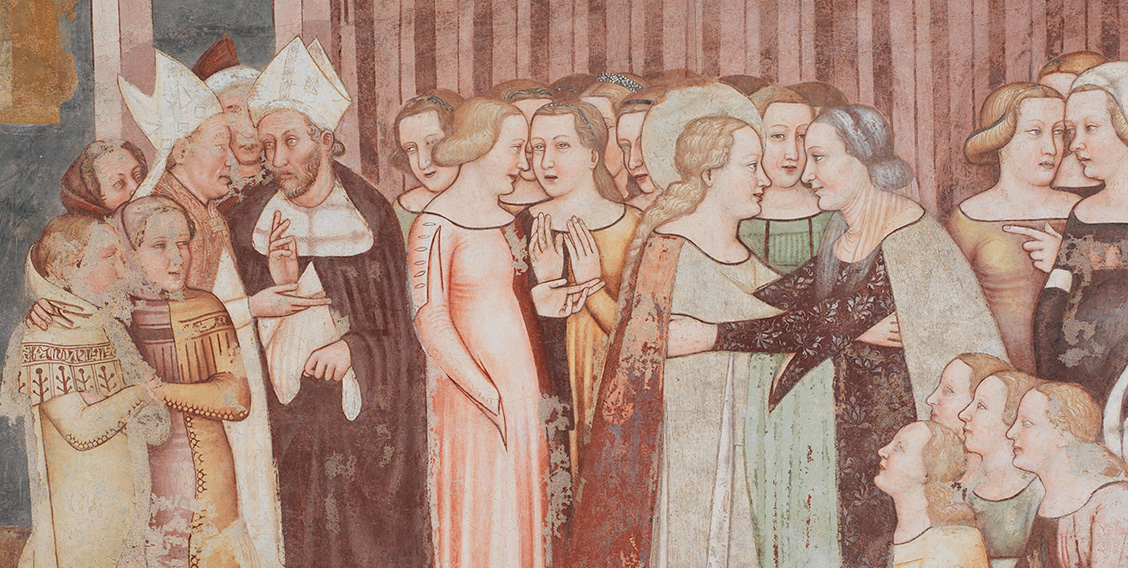
Reached via the light-filled Great Cloister and dominated by a fresco showing Saint Catherine holding a model of the city of Treviso in the palm of her hand, the eponymous church is has the typical sweeping upward movement of the great Gothic style, the light measured and powerful setting off the exquisite cycle of the Stories of Saint Ursula, as well as the other restored frescoes.

Artists from and in Treviso in the inter-war period
Bearing witness to the dynamic cultural fabric that, between 1920 and 1942, led Treviso to be the site of now fewer than eleven art exhibitions reflecting the influence of Impressionism, Expressionism, as well as other international art movements, revealing an intense and highly personal idiom that impacted both portraiture and landscape painting.

Artists in Treviso in the 19th and 20th century
Paintings by Treviso-born and Treviso-based artists, in the final decades of the 1800s: when portraiture and landscapes were revitalised thanks to the powerful expressive idiom of, among others, Luigi Serena and the Ciardi family. Impressionists and Macchiaioli come together with, and spark mutual inspiration from, artists who drew their inspiration from the neoclassical e Romantic movements.

Artists' studios in Treviso during the twentieth century
An illuminating overview of the secrets of the artists in Treviso over the last century, revealing the origins of their works, these ranging from the gesso sculptures of Carlo Conte, to the Treviso “school” of engraving, and including etchings and linocuts.

Arturo Martini, the mature years
Here we see this sculptor’s most important works, displayed by theme: from the voluptuous presence of La Pisana to the ethereal lines of Lilian Gish, via the affecting posture of the Venus of the Ports (La Venere dei porti) to his ceramics and drawings in addition to an extensive display of images of Arturo Martini’s most productive period.

La Chiesa of Santa Caterina and the fresco cycle of Saint Ursula
Reached via the light-filled Great Cloister and dominated by a fresco showing Saint Catherine holding a model of the city of Treviso in the palm of her hand, the eponymous church is has the typical sweeping upward movement of the great Gothic style, the light measured and powerful setting off the exquisite cycle of the Stories of Saint Ursula, as well as the other restored frescoes.

The archaeological section
Retracing the steps of the ancients, exploring the signs and artefacts of civilizations the date from long ago, but which have left tangible traces on the city and its environs, the archaeological section of the Treviso City Museum documents how the inhabitants of this area lived and spent their time from the Bronze Age onwards.

The Ca' Pesaro Years
This inspiring collection puts the spotlight on the young, Treviso-based artists who, flying in the face of the academic idiom of the Venice Biennale exhibitions, gave rise to what came to be known as the Ca’ Pesaro movement, which reached its pinnacle at its exhibition of 1913. Here we can see a selection of the works of Gino Rossi, Arturo Martini, Ottone Zorlini, Guido Cacciapuoti, Aldo Voltolin, and Nino Springolo.

The young Arturo Martini
Martini’s formative years, his exploration of graphics and ceramics as well as the influence of masters such as Giorgio Martini (no relation) and Antonio Carlini, giving rise to the early manifestations of his personal -- and revolutionary -- sculptural language. A comprehensive overview of the career path of this Treviso-born innovator, who is considered one of the leading Italian artists of the twentieth century